One conversation across every channel
A customer emails, then sends a WhatsApp, then phones. Three people in the business answer three of those without knowing about the other two. The customer concludes, reasonably, that nobody is paying attention.
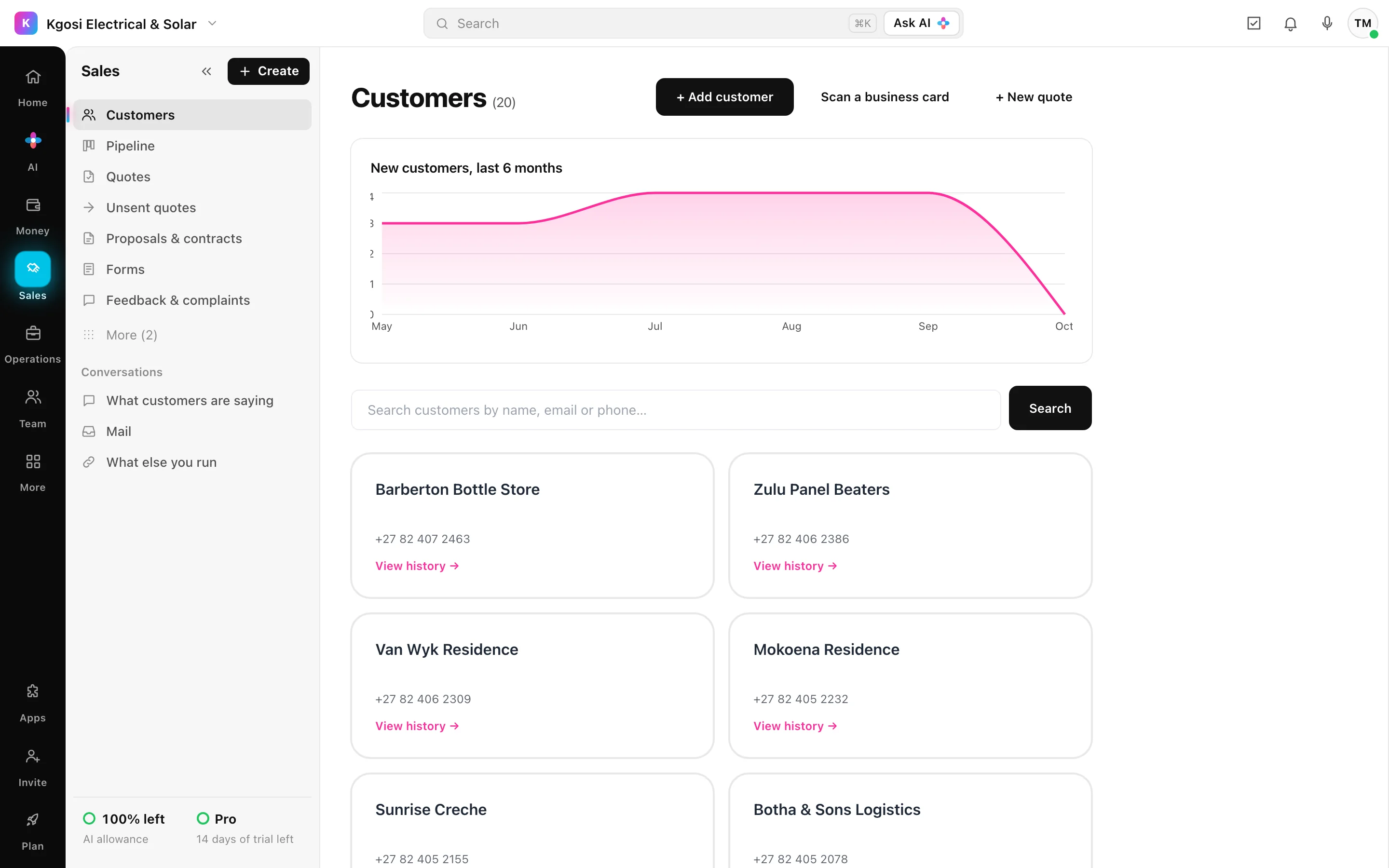
Every customer, and their whole history, in one place.

The customer record is the thread. Everything attaches to it rather than living in whichever inbox happened to receive it.
1
record per customer — documents, messages, calls, deliveries and disputes all hang off it
0
logins a customer needs to see what they owe
9
digits matched on a phone number, so 072, +2772 and 2772 are one person
17 things, and what each is for
Where something needs an account of your own before it will work, it says so.
One message to everyone, from your own address
After you bring your customers across, send them one message from your business's own email: what is new.
Receipts that do not fade
Every receipt your customer gets is kept for them
Customers find every receipt from every Skynat business in their own account, with warranty dates, returns and buying the same again in a tap.
Everything about somebody is in one place, finally
Contact details, addresses, tax numbers, registration numbers, their language, their currency, every document, every payment.
You reach people where they already are
Documents, statements and reminders shared straight into the thread the customer already uses, rather than to an email address they check on Tuesdays.
Email stops being one person's private pile
Connect the business mailbox, and mail lands against the customer it came from. Anybody who should see it, does.
Conversations and call logs
'What did we tell them last time' has an answer
What was said, by whom, and when — including the phone calls, which is where the promises usually get made.
Telling everybody something stops being a copy-and-paste morning
One message to a list, with the skipped list shown before anything is sent.
Consent
You can prove somebody agreed to be contacted
Consent recorded per contact and per channel, which is what POPIA and GDPR actually ask for.
Lead forms and website
An enquiry becomes a customer record without retyping
Forms that post straight into the system, plus simple pages you can publish without a web developer.
Reviews and reputation
The happy customers are asked, and the unhappy ones are caught first
A review request fires when an invoice settles, not at random.
Bookings and appointments
The diary stops being double-booked
Available slots from your own working pattern, bookings against them, and reminders before the day.
Documents in their language
An invoice arrives in a language the customer reads
Set the language on the customer and their documents follow, rather than somebody remembering to switch it each time.
The fake purchase order is said before you ship anything
A buyer calling itself a public body from a free mail address, or a first order far above what your customers usually pay, is flagged on the quote.
Every quote by stage, with what each stage is worth
A board, a list, a table or a calendar of the same quotes.
Every client, supplier, contractor and partner, and what happens next with each
Clients run from first enquiry to paid and back again, suppliers from found to trusted.
You see where quotes and invoices wait, and the one wait that costs most
Six months of quotes, jobs and invoices, laid out from the dates already on them: the usual path, how long each step really takes.
A complaint has an owner and a date, not just a place in an inbox
Requests for help, complaints, compliments and ratings, each with an owner and a date, and an open complaint shows what that customer has spent.
None of this is a separate subscription
Same ledger, same customer record, same team — read from a different angle.











See it against your own numbers
Your workspace is ready in minutes. Nothing to install.