An hour in, a quote is out
Written as the work you actually do rather than the features you get. Four steps, and the longest of them is the one where you look at what it found and correct it.
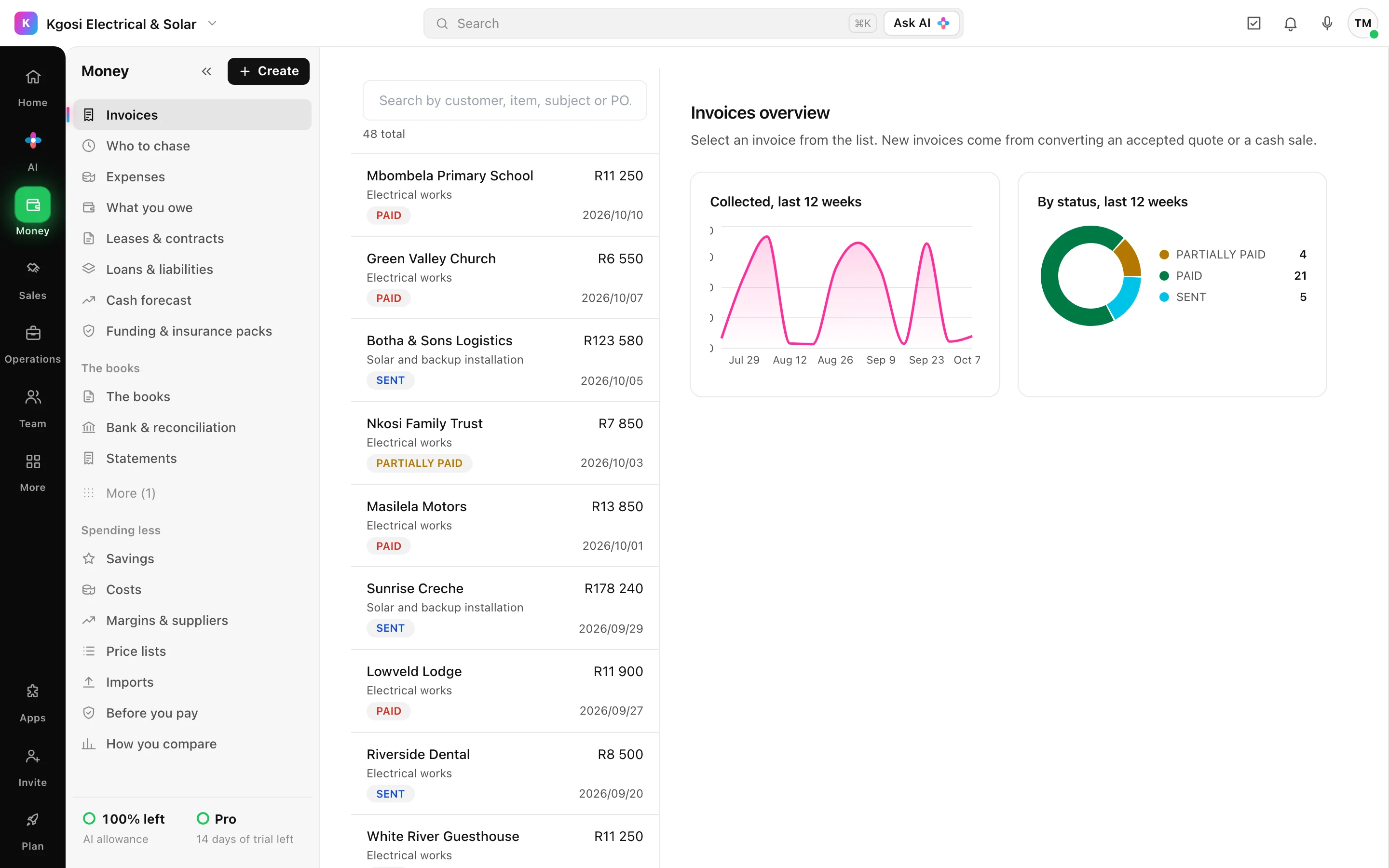
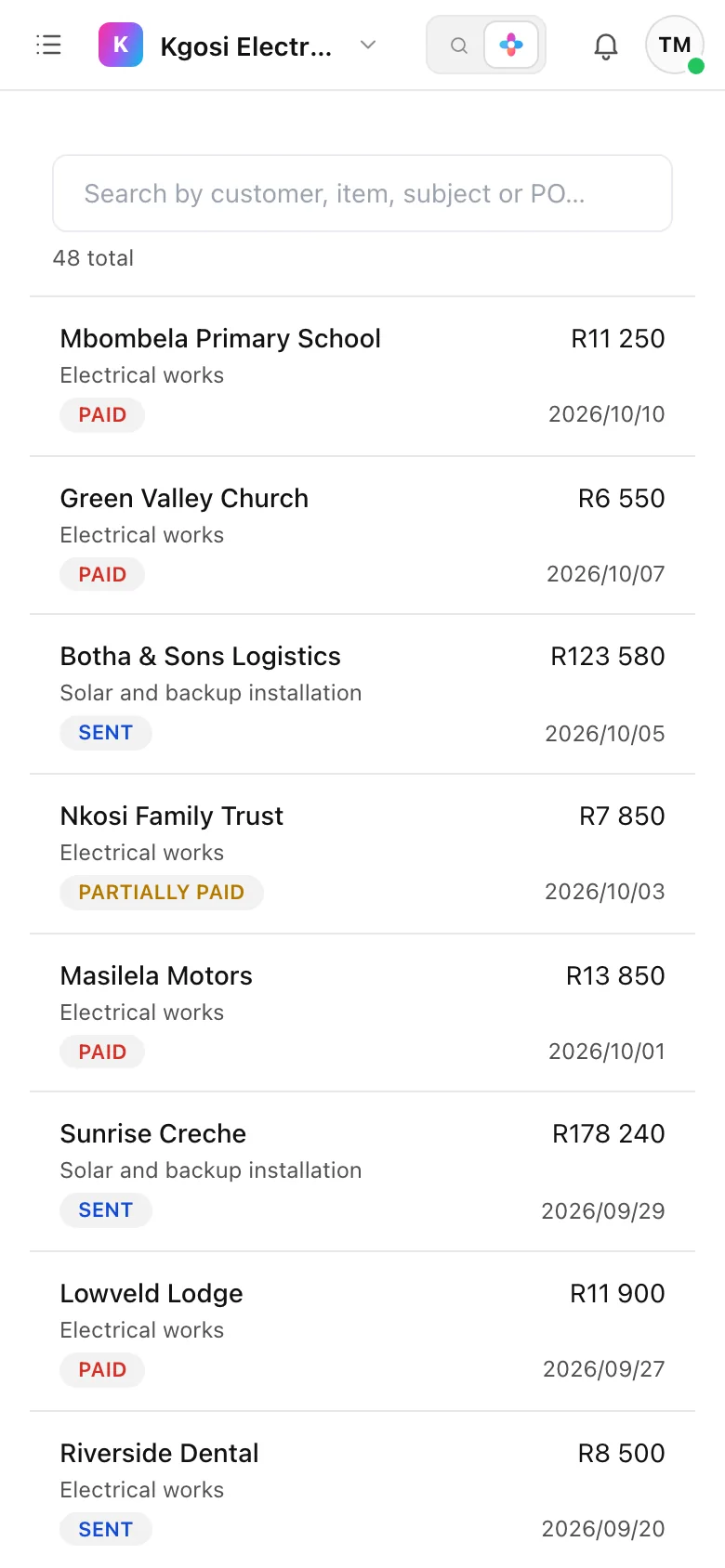
Quotes become invoices, invoices get paid, and every step lands in the books on its own.
Hand it something you already have
A registration certificate, an invoice you sent last month, your price list, or just your website. It reads what you give it and sets the workspace up around what it found — your business details, your products, your tax position. Nothing is saved until you have looked at it.
No blank database, no setup wizard with forty fields.
 Minute one
Send a real quote
Pick from the catalogue it just built, or paste the job in your own words and let it resolve the customer, the products and the prices. It goes out as a branded PDF on a link your customer can open, accept and pay from — no login for them, no app to install.
The customer record is created by sending the quote. There is no separate step.
 Minute ten
Let it start chasing
Turn on the collections ladder and the invoices that go quiet start getting chased in your own words, each rung recorded so the next message knows what the last one said. It stops the instant money lands — by reading what is actually outstanding, not on the next scheduled run.
Nothing is sent without you seeing the wording first, until you say otherwise.
 The same week
Close the month and look at the return
Everything you raised has already posted to a ledger that balances. Close the month and it stays closed. The VAT return is produced from the entries rather than assembled from a spreadsheet, and your accountant gets a login instead of a folder.
A closed month cannot be quietly edited. Reopening one is recorded, with a reason.
 The first month-end
You do not have to move everything at once
Most businesses start with quotes and invoices and bring the books across at the next month-end. Nothing here needs a weekend.
Your customers
A CSV from anywhere, or let it read them off the invoices you import. Duplicates are matched on name, phone and email rather than merged blindly.
Your products
A price list, a spreadsheet, or a supplier's catalogue. Cost and sell price both, because margin is the whole reason to have the catalogue in here.
Your history
Last year's invoices go in as documents and post to the books on the date they were raised, so the comparatives are real rather than starting from zero.
Your opening balances
A trial balance pasted straight out of the old system. It tells you line by line where the two sets of books disagree, before you commit to anything.
Checking what it read off your documents
Reading a supplier name off a photographed slip is right about two times in three, and worse on faded thermal paper. So the product never pretends: every extracted field arrives labelled as read or guessed, and the guessed ones are the ones it asks you to look at.
That is the honest shape of this technology today, and a product that hides it is a product that quietly pays the wrong supplier.
 Read, guessed, or unreadable — said on every field





See it against your own numbers
Your workspace is ready in minutes. Nothing to install.