Your morning
Start the day knowing what needs you.
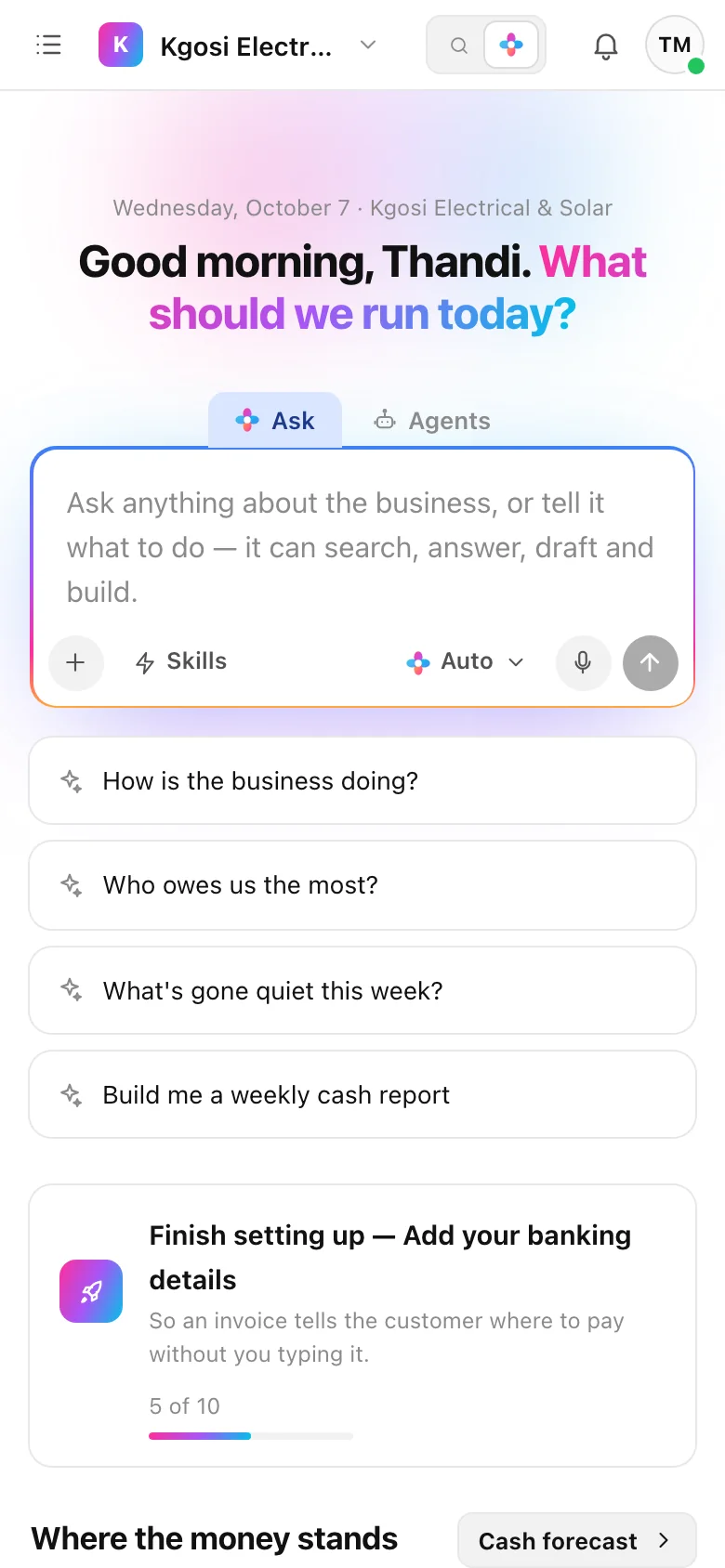
Ask in plain words — who owes us the most, what went quiet this week — and get the answer from your own records, with the work already drafted.
Learn more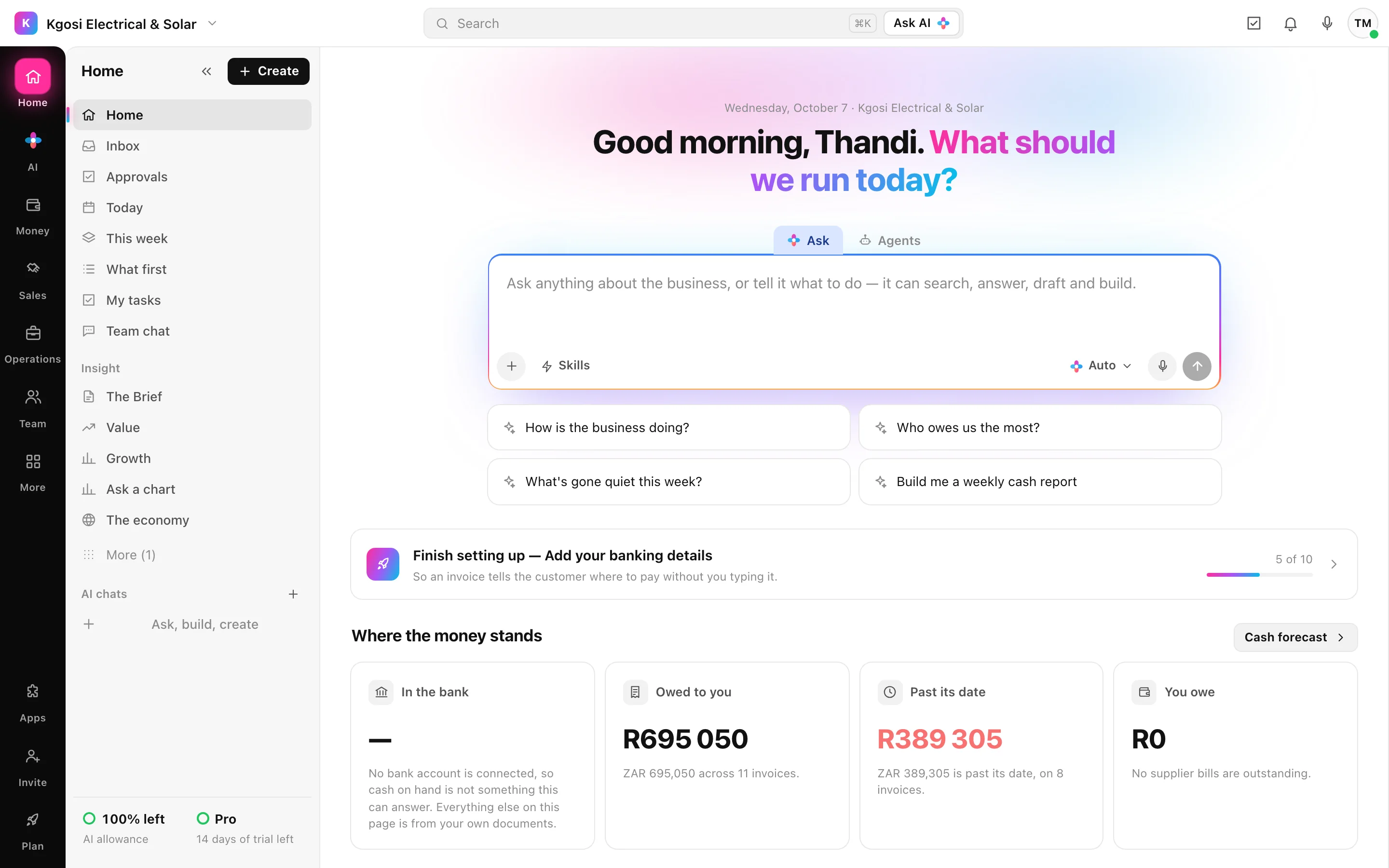
Skynat AI
Others sell you a CRM, an invoicing app or a stock list. Skynat AI is the one engine underneath all of it — your money, your work, your people and the businesses you trade with — with AI that watches it all and acts for you.
Talk to the consultant · your margins and break-even in five minutes · or start a new business

Money, customers, work and the books — and an assistant that tells you what needs you today.
Ask in plain words — who owes us the most, what went quiet this week — and get the answer from your own records, with the work already drafted.
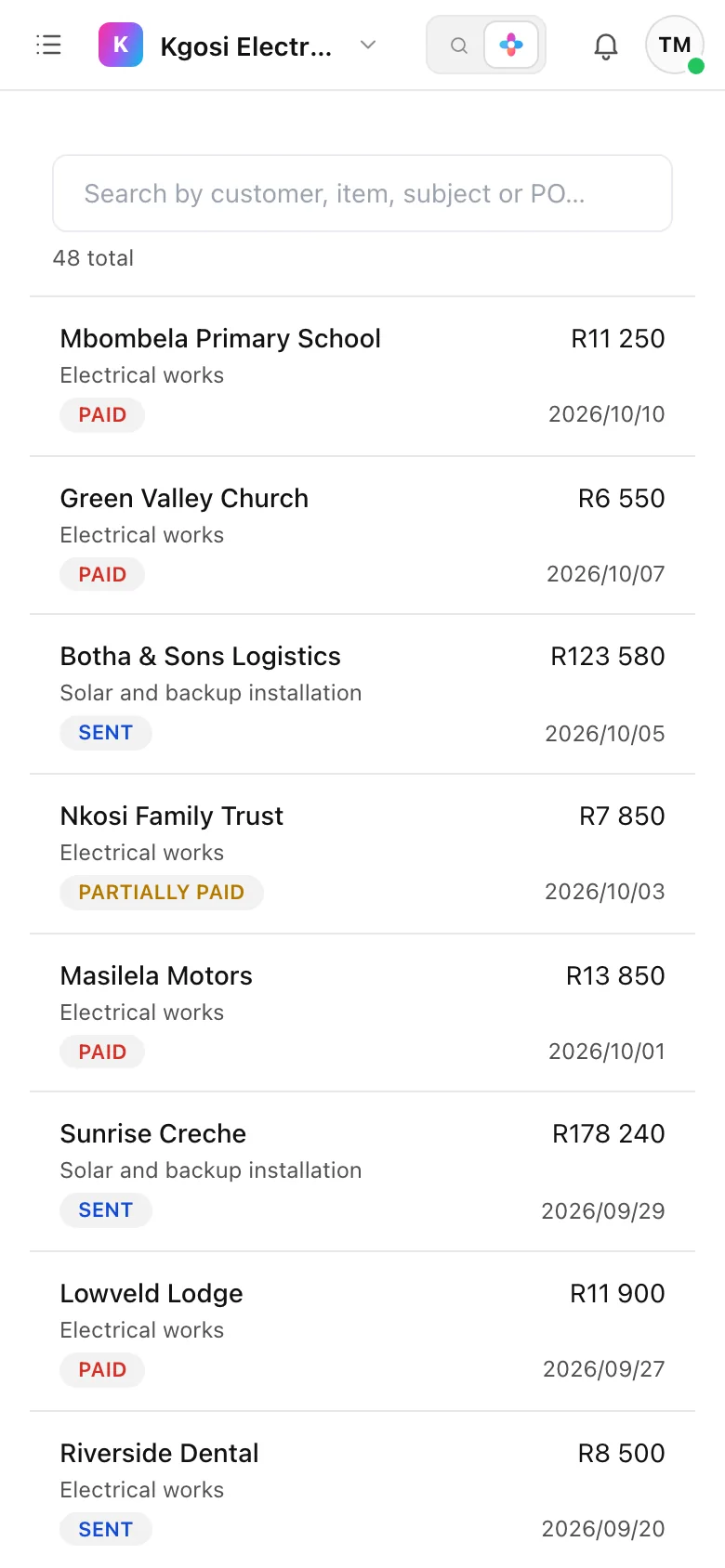
Learn moreEverything late, by how late, and who is close to their limit — with the reminder written in your tone, waiting for your yes.
Learn more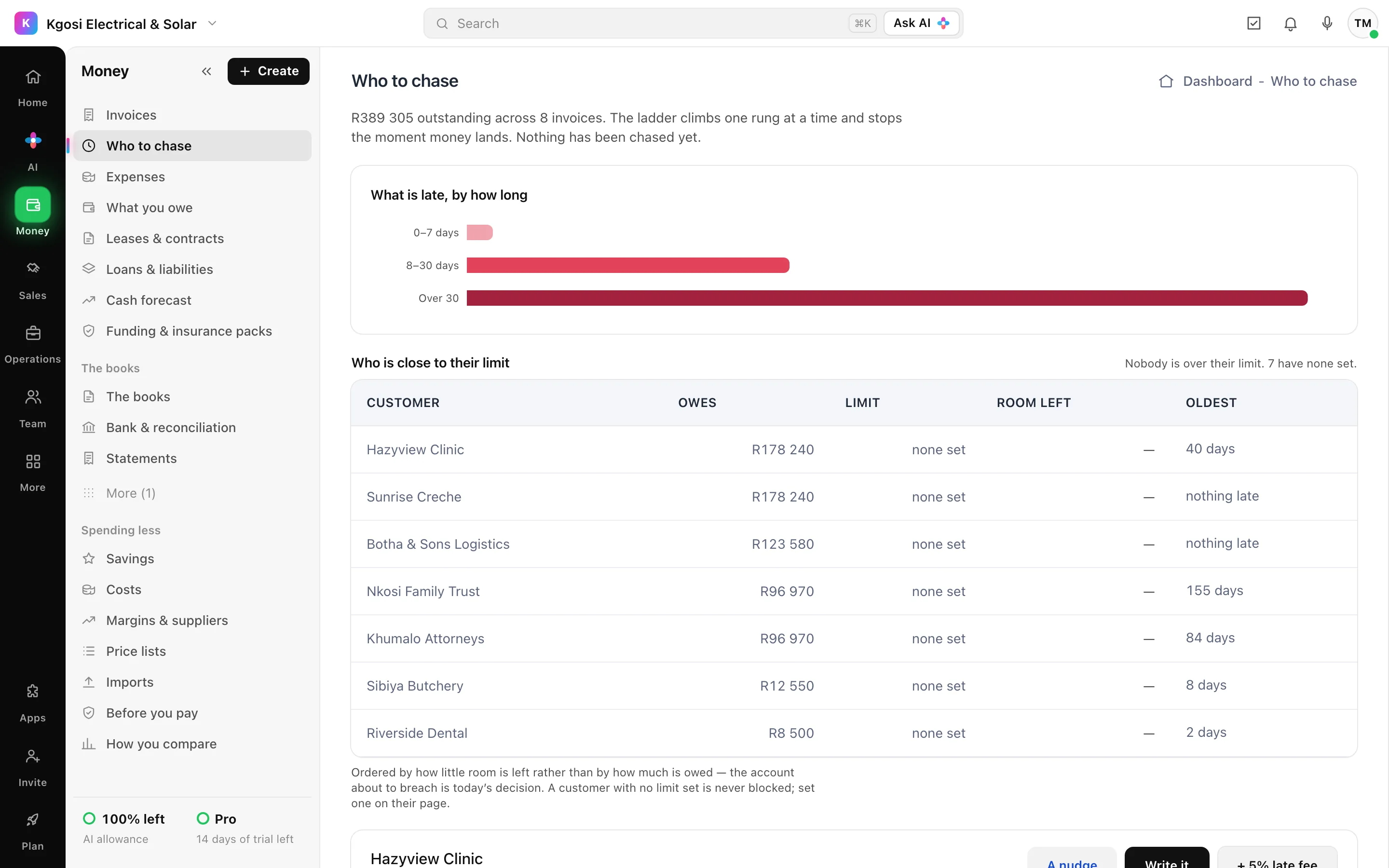
Photograph a receipt and it is read, filed and posted. Every cost lands where your accountant expects it.
Learn more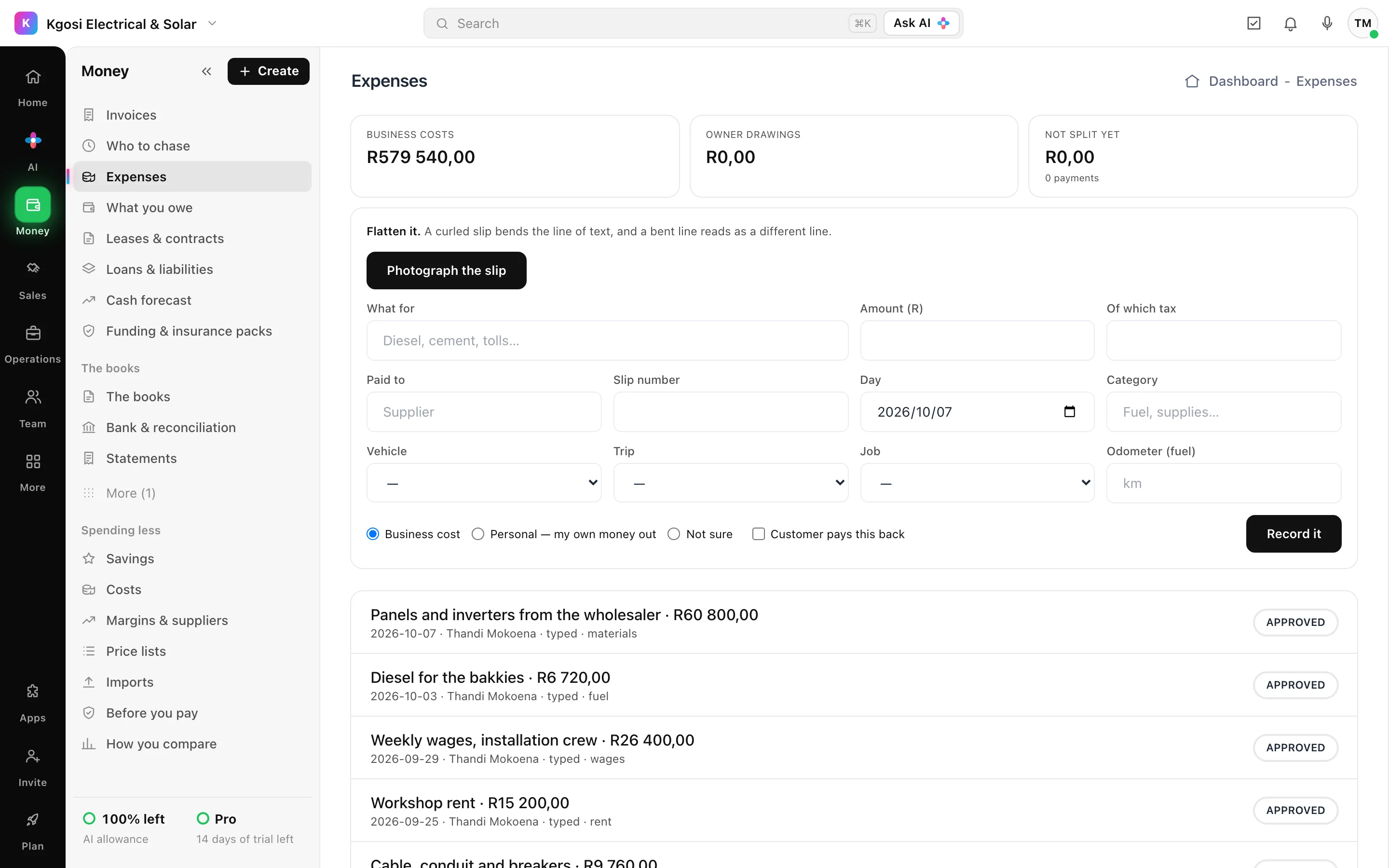
Fuel, rates, prices and rules that move your trade — watched for you, and said in money, before they land on your margin.
Learn more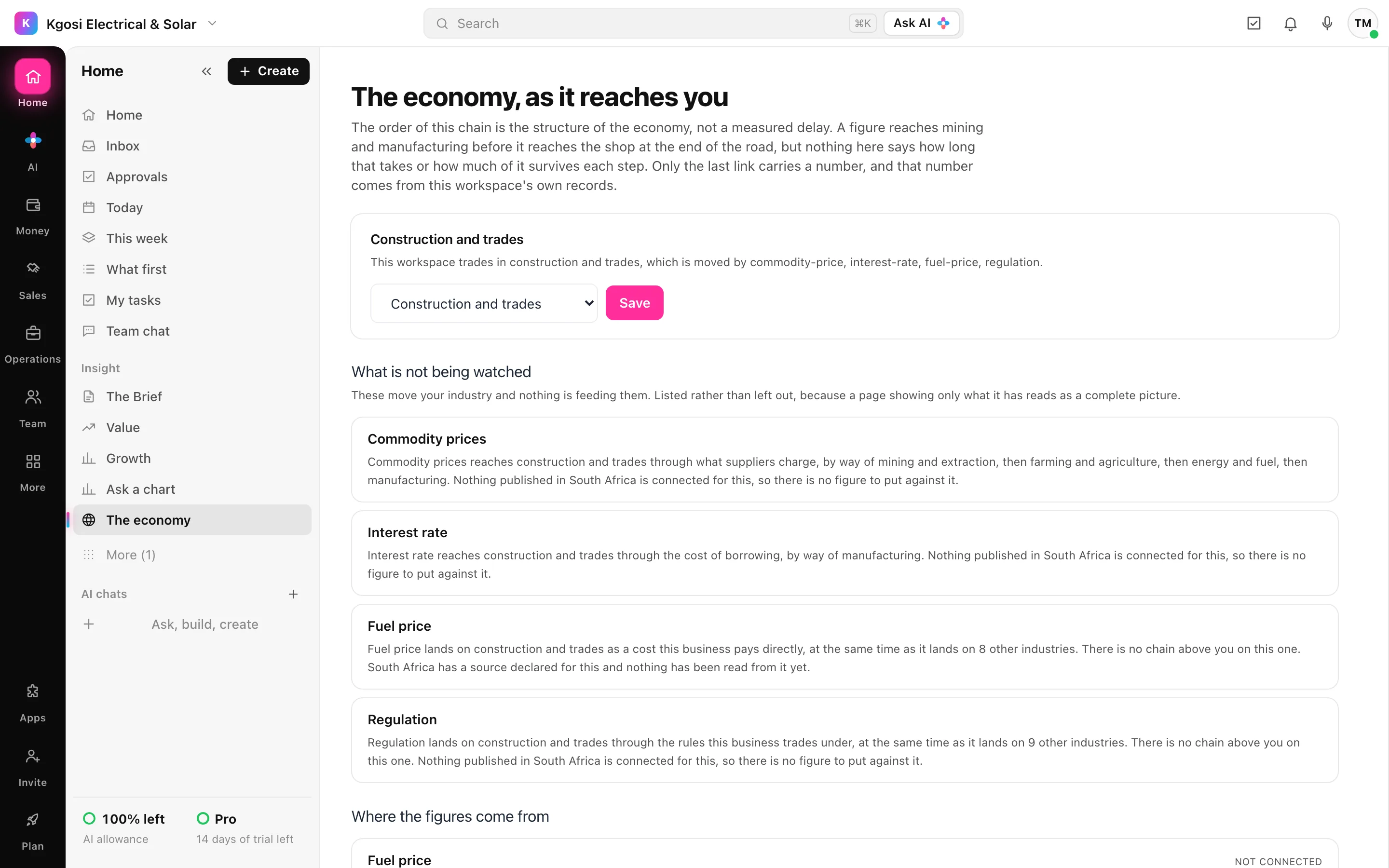
The same system on your phone, your laptop and the till — Android, iPhone, Mac, Windows or any browser. Nothing to install to get started.
20 trades, from the corner shop to the law firm — each with a page of the problems it actually has.
Works with what you already use
The agentic layer
Not a chatbot with a job title. Six of them, each watching one part of the business, each saying what it looked at and why it raised something.
Money leaving that nobody authorised
Empty running, stock turn, who is on duty
Which work to stop, and which customer to keep
The same money being spent twice
The date you will otherwise miss
The quote that went quiet
No setting lets money move or a customer be contacted without a person.
Every one of them is somebody's good product. The problem is not any of them — it is the gaps between them, and the person whose job is to carry figures across those gaps by hand, usually on a Sunday.
An invoice raised in one, a payment recorded in another and a VAT return built in a third is three versions of the same month. Only one of them can be right, and nothing in the stack can tell you which.
The spreadsheet
$10 240
Invoicing app
$10 650
Bank statement
$9 940
Stock sheet
41 units
counted twice
The notebook
$350
cash, not banked
“did they pay?”
Payroll service
$1 720
The same month, in seven places, and none of them agree.
It is a Tuesday. The question is never which module handles it — it is whether anybody finds out before it costs you.

Monday, 07:10
The driver phones from the gate. The load is two pallets short and the customer is already waiting.
The short-ship is on the job before he has hung up, the invoice drops to what actually went, and the customer gets the new figure rather than a surprise at month-end.

$3 400
signed off, never invoiced
Finance would raise this

Tuesday, 11:30
A customer asks for the quote again, “but sharper this time”.
You can see what the job costs you before you answer — materials at what you paid, not the current price list — so the discount is a decision instead of a guess.

Thursday, 18:00
The power is out, the card machine with it, and the queue is not getting shorter.
Sales keep going on the phone in your hand and settle when the power and the signal come back. Every one carries a key it generated, so nothing is captured twice on the way in.
$810
a month, going out twice
Efficiency would raise this

Friday, 17:20
You are three clicks from paying the same supplier invoice a second time.
It is held, with the first payment and the date beside it. Nothing about the month has to be remembered by the person who happens to be looking.
There are 230 things in here. These three are the ones that change how a week feels.
Cash, what you are owed, what you owe, what is past its date. Then six things worth deciding today — dated first, then by what they are worth — and where it could not tell you something, it says so instead of filling the space with a number it is not sure of.
The real front page: ask anything, and where the money stands
Nobody is sent on a course. From the first quote to money in the account, with the agent doing the part nobody has time for and stopping at the part nobody should automate.
 01
01Pick from your catalogue, or paste the list in your own words and it resolves the customer, the products and the prices. Out as a branded PDF in under a minute.
 02
02No login, no app, no account to create. The moment they accept, it becomes an invoice and the status moves on its own.
 03
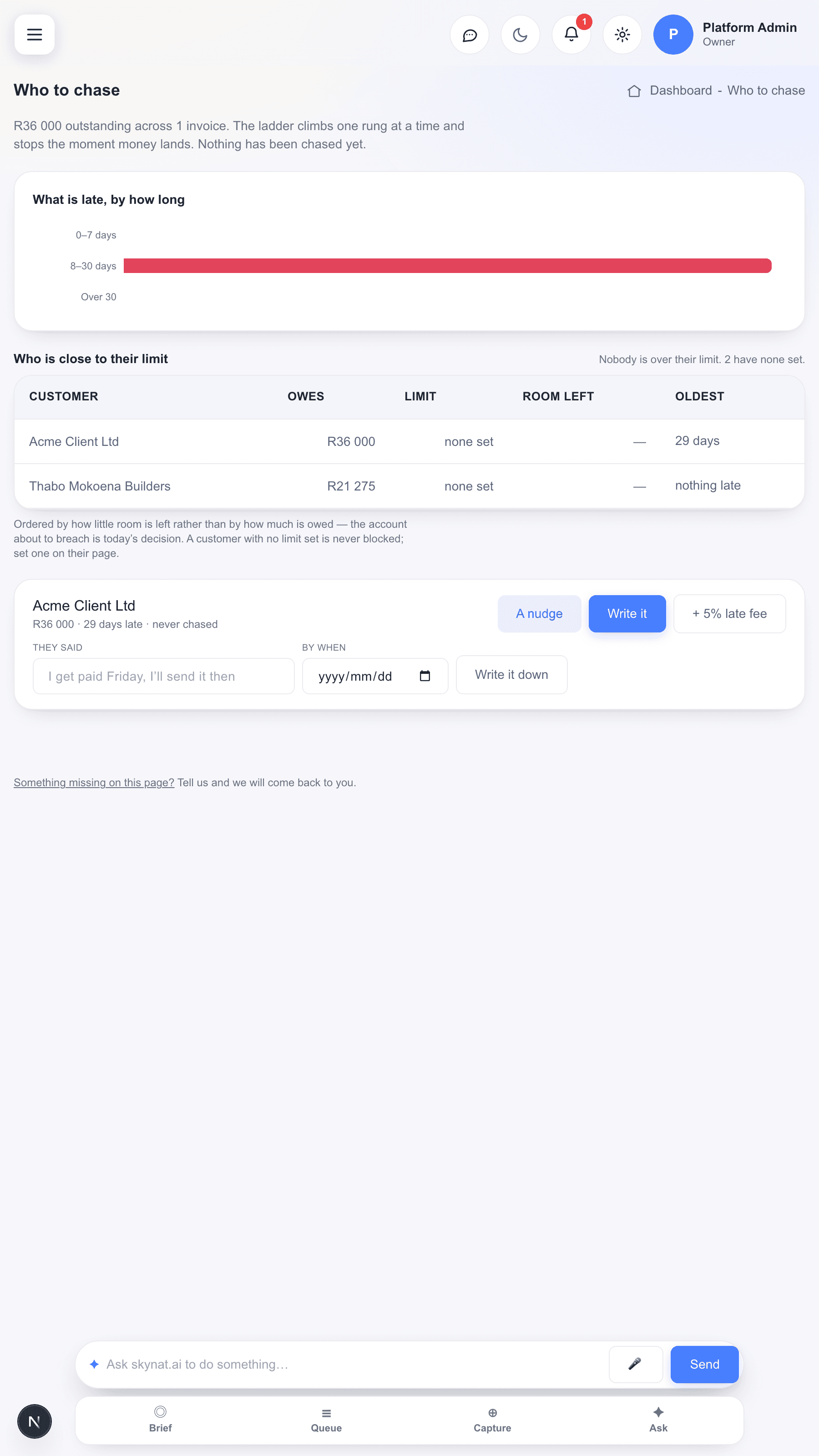
03A ladder of reminders, each rung recorded so the next message knows what the last one said. It stops the moment money lands — and you see the wording before your name is on it.
 04
04Every step posted to a real double-entry ledger as it happens, so the VAT return is a report rather than a fortnight of rebuilding a year from bank statements.
Three autonomy settings, and none of them lets money move or a customer be contacted without a person. Enforced in code from the tool's own classification — never from what the model says about itself.
Hand it something you already have — last month's invoice, a price list, a registration certificate, your website — and it reads that and builds the place around it. Nothing is saved until you have seen what it found.
Not a chatbot bolted onto a database. It holds the same ledger you do, it has a spending limit you set, and every action it takes is checked against the records afterwards — so it can never tell you it sent something it did not send.
things it does, each one written down as what it does for you
areas of the business, on one subscription and one ledger
countries with their own tax, number checks and filing rules built in
tests that run before anything reaches you






The same engineering standard as the software the world's largest companies run on: every change planned, designed, reviewed and run through more than two thousand tests before it reaches you.






8 packs. A logistics operation watches empty running; a retailer watches stock turn. Nothing is switched off — a retailer with a delivery van still hears about the van.




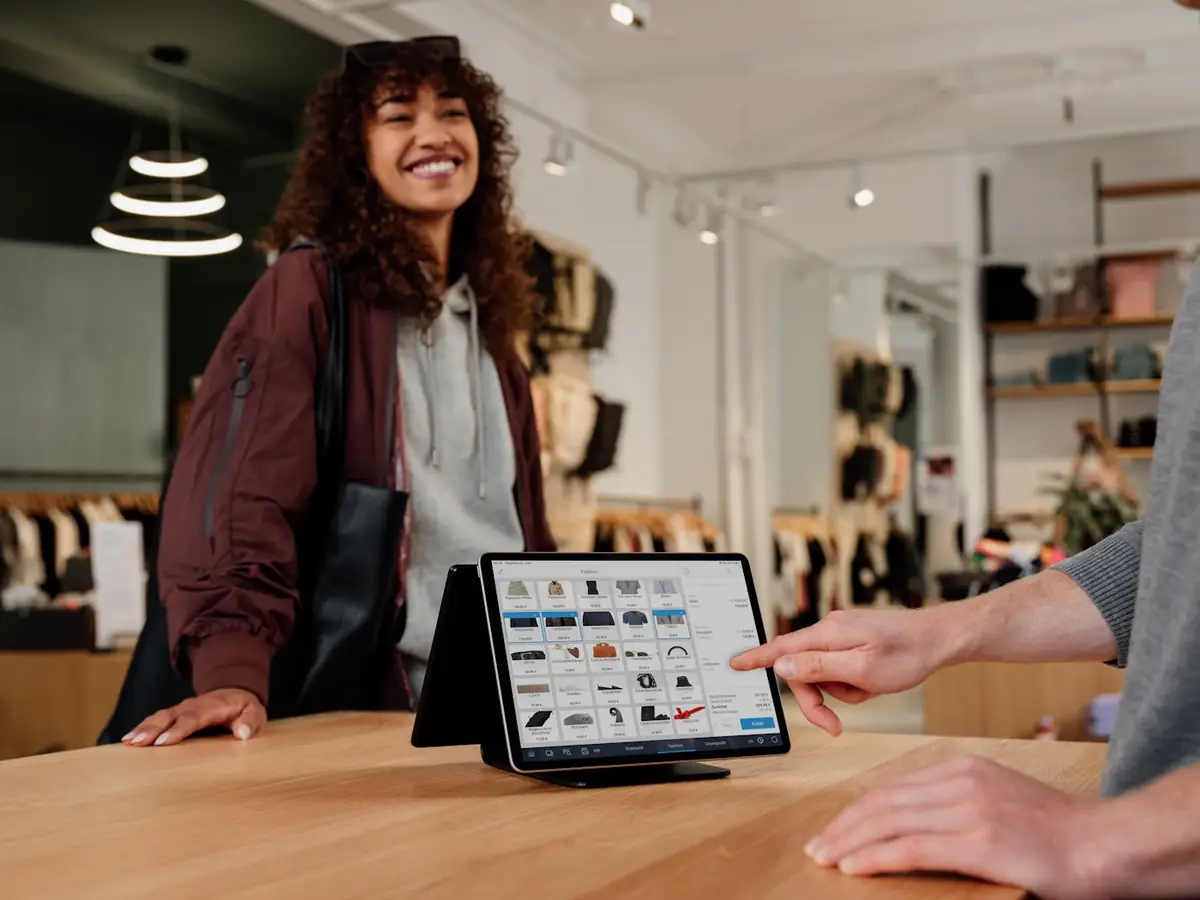



Find your trade — 20 of them, and the problems each one has →
Not a number in a sentence. Move through the areas and look for the one your business actually turns on.

Quote, invoice, chase and settle — without anybody having to remember.

Bills, approvals, and the questions worth asking before money leaves.
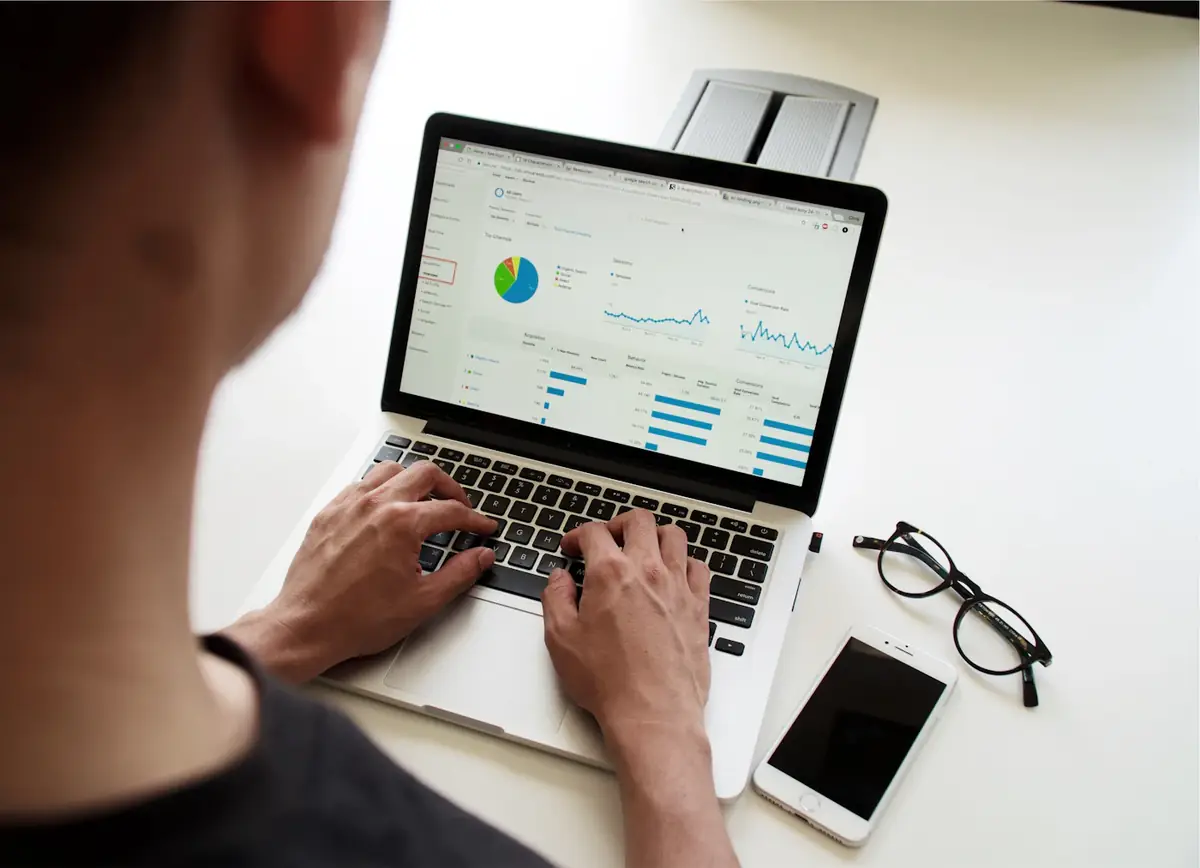
Real double-entry underneath, so the tax return is a report and not a reconstruction.

Where things are, what they cost, what they are worth, and whether they are real.

The till, the credit book, the rewards card, and the rep walking the route.

Getting it there, getting paid for it, and knowing what the second trip cost.

Rosters, attendance you can prove, payroll, and the people a payroll system has no row for.

Work in the field, evidence it happened, and the certificate at the end.

Everything a customer said, everywhere they said it, in one place.

The dates you owe somebody, the scams aimed at you and your customers, and what happens to your data.

Six officers watching the business, and a gate that stops them doing anything rash.

Your own numbers, and — if you want it — where they sit against everybody else's.
1 of 12
Most business software is one country's product with a currency dropdown added. The difference shows up where it matters: the tax rules it knows, the network it expects, and whether it assumes everybody pays by card.
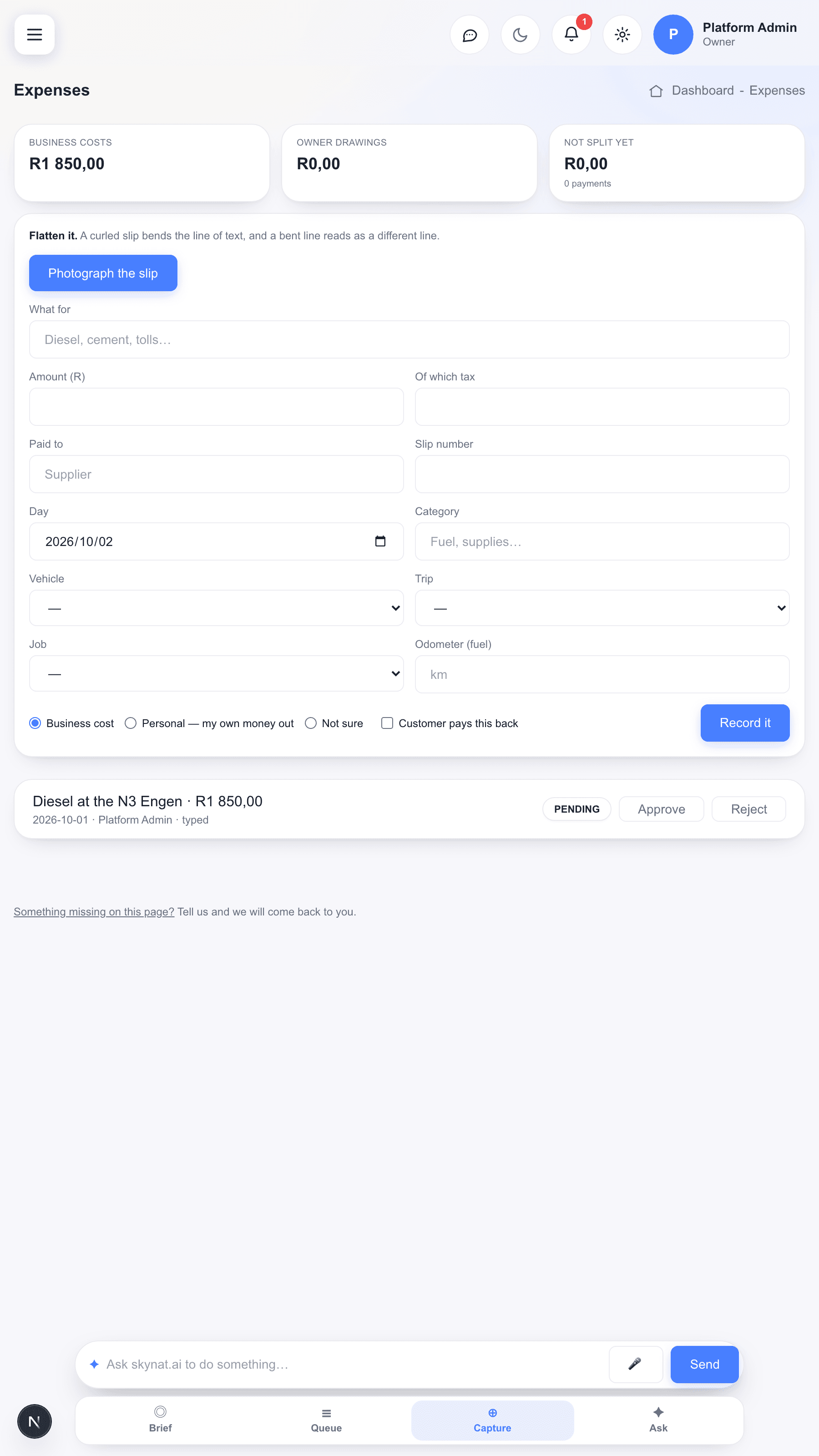
A slip captured out of range, held on the phone until there is a signal
Each country's VAT or sales-tax treatment, payroll bands and filing calendar are held separately rather than approximated from one. Where a band has not been verified, payroll refuses to compute the tax instead of inventing a number.
A slip photographed with no signal is held on the phone and sent when there is one. The retry cannot duplicate, so a reply lost on the way back does not become a second cost in the books.
Quotes, invoices and statements on WhatsApp, email or a link, whichever your customer actually opens. An inbound message is matched against a closed list of instructions and nothing else, because an inbound message is somebody else's text.
Cash on delivery, a rider's float, a credit book written at the counter. It does not assume a card on file, because most of the world's trade does not have one.
“The part nobody believes until they see it is that the chasing stops the moment the money lands. Not on the next run. Immediately, because it reads what is actually outstanding rather than a list somebody built this morning.”
How the collections ladder was specified — and the reason the first rung is a polite note rather than a lawyer's letter.

Everything above is the how. This is the why — three things that stop being your problem once the business runs on one ledger instead of nine exports.
The month closes on the FridayNot over the weekend after it, because the books were right the whole way along rather than rebuilt from bank statements at the end.
You answer the price question straight awayWhat the job costs you is on the screen before you reply, so a discount is a decision instead of a guess you check afterwards.
Nobody has to be the one who chasesThe reminders go out on their own and stop the moment money lands. You see the wording before your name is on it.
No. Hand it something you already have — a registration certificate, last month's invoice, a price list, or your website — and it reads that and sets the place up around it. Nothing is saved until you have seen what it found. Most businesses start with quotes and invoices and bring the books across at month-end.
They get a login. There is a console built for a practice that works across several clients at once, showing which books have filings past their date and which have unmatched bank lines. Most accountants prefer it to the shoebox.
No. Which tables may be pooled is written down by name and two of them never can be. Where a figure is drawn from more than one business — a price benchmark, for instance — it is a number, never a name, and your workspace has to agree to take part before it either contributes or draws on it.
It is included in the seat. There is a monthly allowance per seat and the console shows what has been used. Heavy, unattended work — overnight sweeps across a large ledger — is where an allowance runs out, and you are told before it does rather than after.
The capture does. A slip photographed with no signal is held on the device and sent the moment there is a network, and the retry cannot produce the same cost twice. The rest of the product needs a connection, because a cache that serves a stale invoice is worse than a page that will not load.
No. There is a per-action limit and a daily ceiling, both blank until you set them — a hundred payments just under a per-action limit is the attack the daily figure exists to stop. And none of the three autonomy settings lets money move or a customer be contacted without a person, enforced in code from the tool's own classification rather than from what the model says about itself.
That depends on the deployment, and the product tells you rather than guesses. Several countries restrict moving personal information across their borders, so a deployment that cannot answer the question refuses to make the promise instead of making one it cannot keep.
Yes, and you are offered a copy of your records on the way out. We do not run an export wizard that makes it a one-click habit, and we say that plainly rather than pretending otherwise — but your books are your books, and nothing here is designed to hold them hostage.
More of them on the questions page, and the long answers about data on the security page.
No card to start. Per seat, because a team of ten should not run the agent on one person's subscription.
$29
a month, including 3 seats
One person, or one person and a hand or two.
$19
per seat, per month
A team that runs the business in here every day.
$34
per seat, per month
Several locations, or a team that leans on the agent hard.
Custom
volume seats from $28 each
Volume seats, your own security review, a contract.
Full detail, including field seats and what the agent costs, on the pricing page.
Sign up with an email, hand it an invoice or a price list, and it builds your workspace around what it reads. Fourteen days free, no card, nothing to install.