No conflict missed, no date blown, no trust account short
The claims made against lawyers cluster in three places — a deadline missed, a conflict of interest, and documents — and the career-ending one is trust money.
At sign-up, choose Professional firm — everything below is on from there.
What it watches for
A conflict of interest found after the first consultation.
A prescription date or court deadline missed.
A trust payment that takes a client's balance below nothing.
skynatflow.com
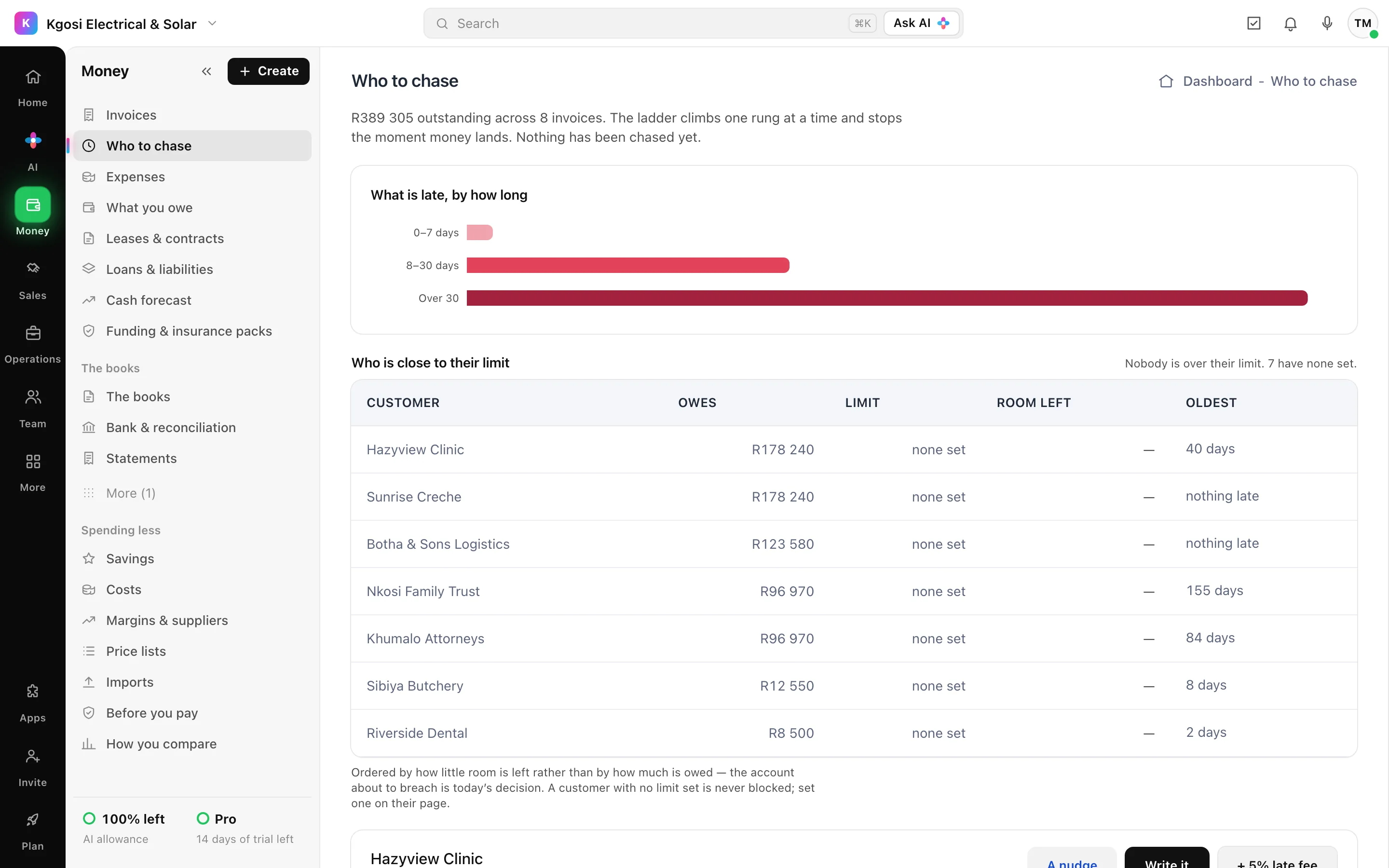
What is owed, what is late, and who to call first — the moment you open it.
The problems it solves
What goes wrong, and what it does about it
For attorneys, advocates' chambers and conveyancers.
The problem
A conflict of interest found after the first consultation.
What it does
No matter opens without a conflict check: the client and every other party are searched across every matter and contact first, and what was found — and who decided to go ahead, and why — stays with the matter.
What you get
A conflict is found before it is a complaint.
The problem
A prescription date or court deadline missed.
What it does
Whoever enters a date is not the person who confirms it. An unconfirmed date is raised, and so is a date coming close. Time limits are worked out only from periods the firm wrote down for itself.
What you get
Every deadline has had a second pair of eyes on it.
The problem
A trust payment that takes a client's balance below nothing.
What it does
A payment out of trust that would leave a client's balance below nothing waits for a reason, which is kept and audited; the month's reconciliation sets the bank's balance against what is owed to every client.
What you get
The trust account reconciles, and the firm can show it.
The problem
A client taken on before their identity was verified.
What it does
Each client's due diligence says plainly what it still lacks; a prominent person needs senior approval; no money goes into trust before it is complete; and cash over the reporting amount is listed with the day it must be reported by.
What you get
The paperwork an inspector looks for is done before the money moves.
Said plainly
What it does not do yet
The product fills in no period of the law's: time limits and reporting amounts are the firm's own to write down.
And everything else
Nothing is switched off
The trade decides what the workspace opens on. It never removes anything — the invoices, the books, the team and the assistant come with every one of them.
Type what you need
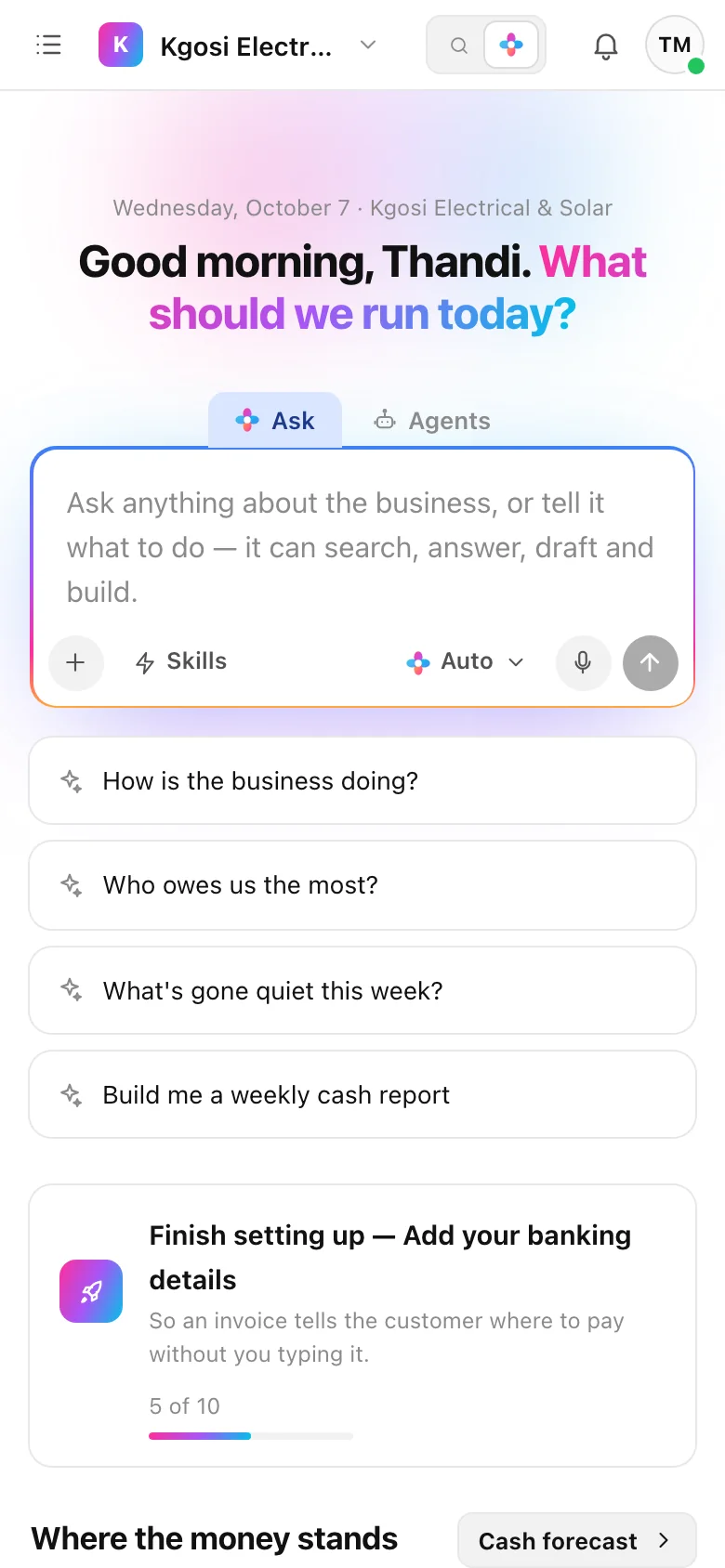
Ask in plain language and it drafts the quote, the invoice or the customer record — then shows you the draft before anything moves.
An AI that stops for you
Three autonomy settings, and none of them lets money move or a customer be contacted without a person. Enforced in code, not in a prompt.
Quote to cash
Build from your catalogue, send a branded PDF, and the status moves itself from sent to seen to paid.
Chasing that escalates
A ladder of reminders, each rung recorded, that stops the moment money lands — and never opens with a lawyer's letter.
Real books underneath
Double-entry, bank feeds, reconciliation and a VAT return generated rather than reconstructed under deadline pressure.
Stock that tells you first
Reorder points from real demand, batch expiry before the date, and bins with a walking order so picking never depends on memory.
Proof before the argument
Geotagged, timestamped, signed evidence captured as the work happens — not asked for after a customer disputes it.
The people, not just the pipeline
Rosters, geofenced sign-on, payroll, and the daily-wage workers a payroll system has no row for.
Where you sit, not just what you made
Margin, days to get paid and win rate against your own trade — anonymously, opt-in, never below five businesses.