Stop waiting on money nobody is chasing
Most small businesses are not short of revenue. They are short of the twenty minutes a day it takes to notice that four invoices went quiet, and the nerve to send the fifth reminder. This is the part of the business that runs itself.
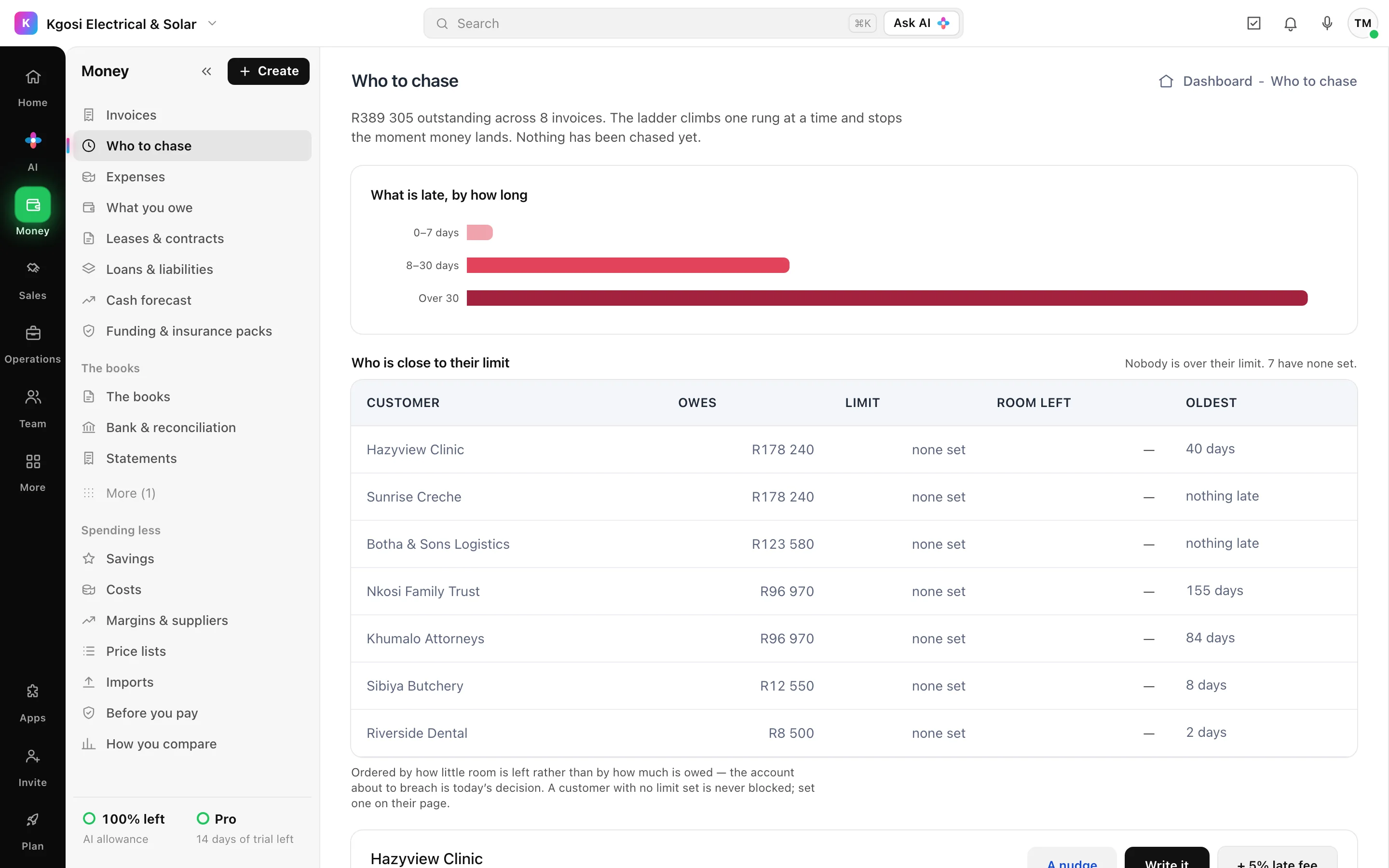
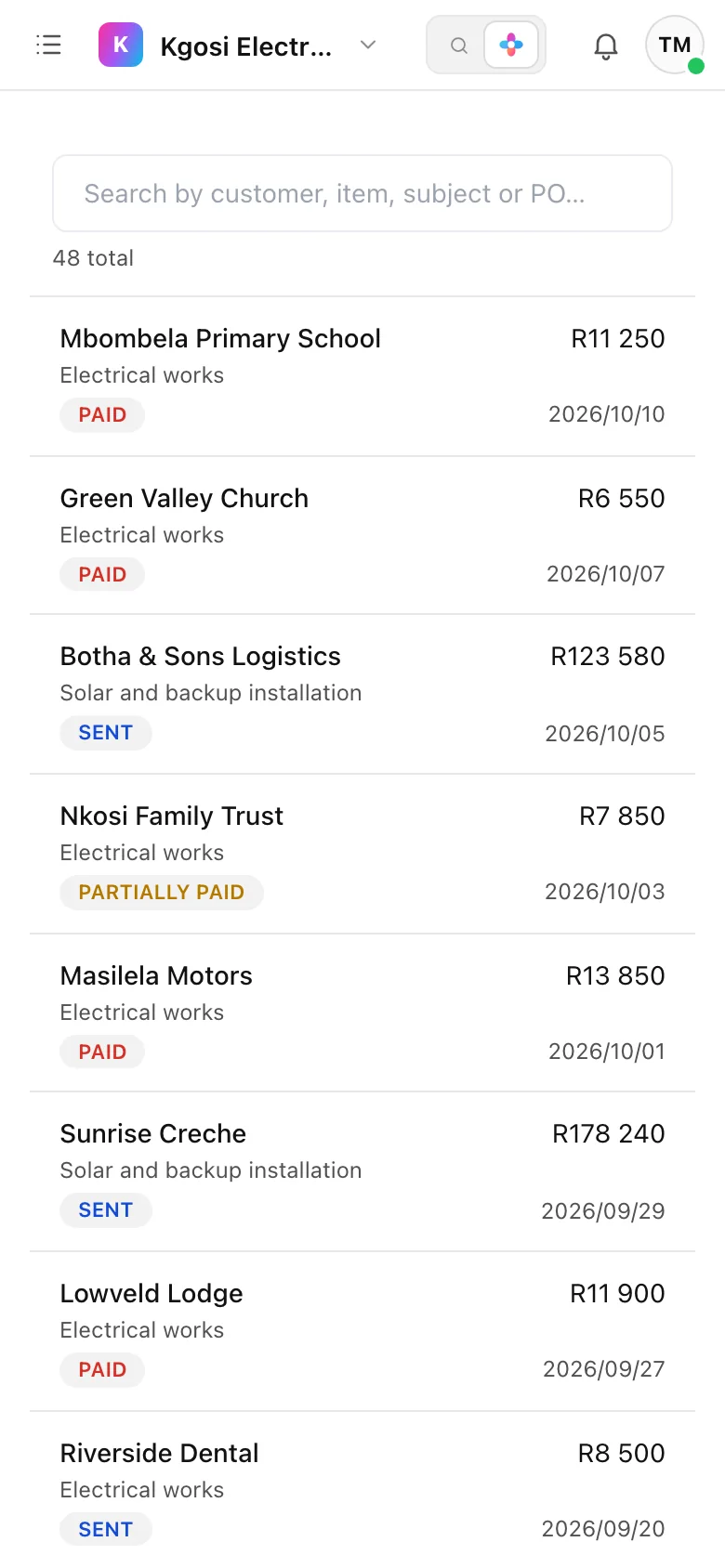
What is owed, what is late, and who to call first.
A quote that goes unanswered and an invoice that goes unpaid look identical in most software: nothing happens. Here, nothing happening is the thing that triggers the work.
6
rungs on the collections ladder, each one written down so the next message knows what the last one said
0
reminders sent without somebody seeing the wording first
1
click for a customer to view, accept and pay — no login, no app
21 things, and what each is for
Where something needs an account of your own before it will work, it says so.
An invoice between two businesses is written once
When you and a supplier or customer both use Skynat, connect once.
A quote leaves looking like it came from a business three times your size
Build from your catalogue or paste a list in your own words and it resolves the customer, the products and the prices.
Every invoice knows its own story
Sent, seen, part-paid, settled, disputed — the status moves on its own from the payments and the portal, not from somebody updating a spreadsheet column.
Your customer can pay you at eleven at night without asking anybody for a login
Every customer gets a private link. They see what they owe, what they have paid, every document you have sent them, and they can accept a quote or pay an invoice from it.
Late invoices get chased properly instead of politely six times
A ladder of escalating messages, each rung recorded so the next one knows what the last one said.
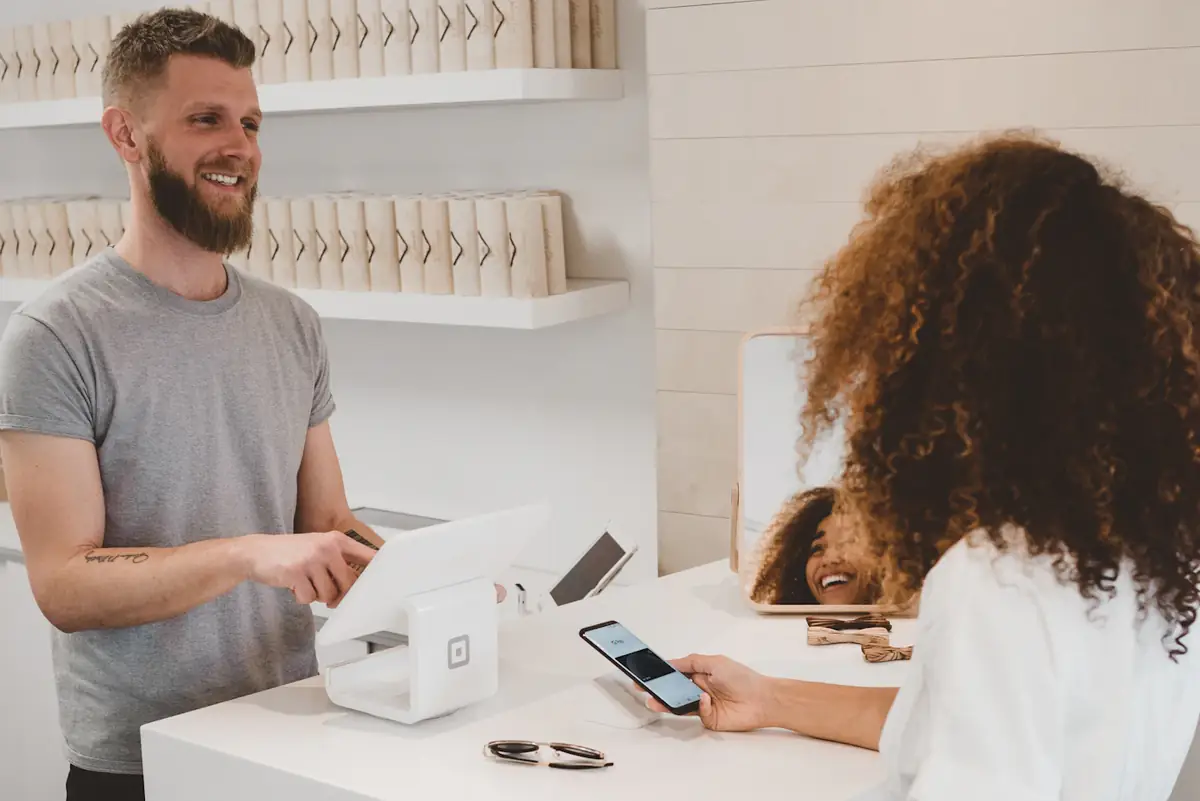
A customer pays with the phone already in their hand
The till shows a code for the amount and the customer scans it, or taps the sticker on the counter.
Your regulars pay in one touch, and their card is never charged without them
A customer can keep their card with your business when they pay.
Paid by M-Pesa, MTN MoMo or Airtel Money without typing a till number
The customer types their number and a prompt appears on their phone asking for their PIN.
Take a tap at the till without a separate system
The till sends the amount to your Square app (Tap to Pay on iPhone and Android), your Viva app, or your Yoco card machine, and reads back what happened.
Payment plans
A customer who cannot pay in full stops becoming a customer who pays nothing
Split what is owed into instalments with dates, track each one, and chase only the instalment that is late rather than the whole balance.
The 'what do I actually owe you' question takes one send
A statement per customer, per period, built from the ledger rather than assembled by hand.
Recurring invoices
Retainers and subscriptions bill themselves
Set the shape once — weekly, monthly, quarterly — and the invoice is raised on schedule with the right dates and the right reference.
Progress billing
Long jobs get paid for in stages instead of at the bitter end
Agree the stages up front, claim against each one as it completes, and the claim carries what was agreed rather than what somebody remembers agreeing.
Being late costs something, and the customer knows in advance
A fee applied on your terms against a specific invoice, appearing on the next statement.
A complaint stops quietly aging into a write-off
When a customer says something is wrong, it becomes a tracked thing with a clock on it instead of an email somebody meant to answer.
A counter sale lands in the books the same way a quoted job does
Barcode lookup, checkout, cash or card, and the same ledger discipline whether it came from the till or was typed in by hand.
The drawer counted in the time it takes to take a picture
Spread the notes on the counter and take one photo.
A quote with an extra zero gets caught before it goes out
Compares a document against that specific customer's own history, not a fixed platform threshold, and flags anything three times their normal.
A fake proof of payment stops releasing your goods
A proof a customer sends is shown beside whether money like it has arrived in the bank lines you bring in — a cheque deposit counted as money that can still bounce.
The overpayment scam stops at the refund
A refund on an invoice paid over its amount, from money not yet seen cleared in the bank, is held until somebody who runs the business says the money is cleared.
A receipt for every counter sale, on the roll your printer takes
Each sale prints as a receipt on an 80 mm or 58 mm roll, or goes to the customer from your phone as the PDF itself.
None of this is a separate subscription
Same ledger, same customer record, same team — read from a different angle.

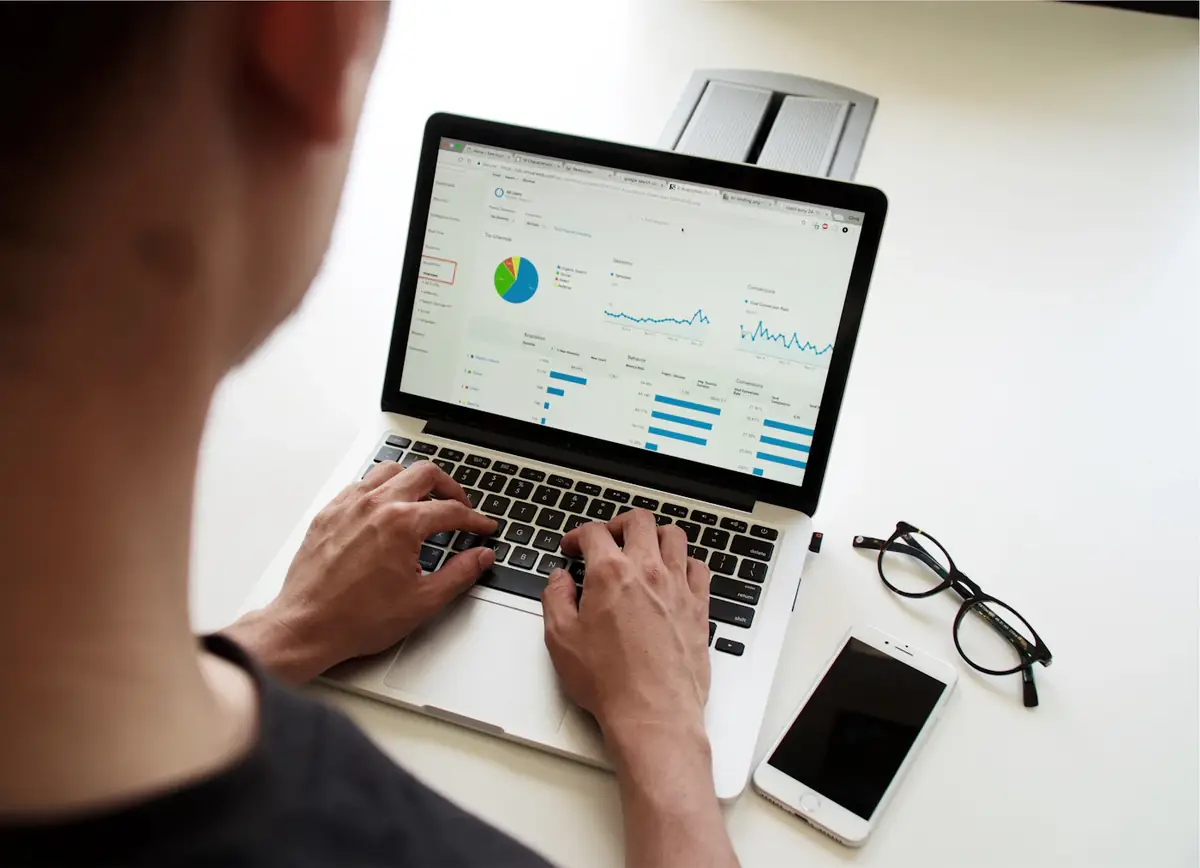








See it against your own numbers
Your workspace is ready in minutes. Nothing to install.